Connecting-rod forging die: HiNC's feed optimization takes a quarter off the hand-revised programs, and finds the corner no feed can fix (3-axis)
- Original source
- A. Dziubińska (Warsaw University of Technology), The New Technology of Die Forging of Automotive Connecting Rods from EN AB-71100 Aluminium Alloy Cast Preforms, Materials 2023, 16(7), 2856 (doi:10.3390/ma16072856).
- Search keywords
Dziubińska 2023 connecting rod EN AB-71100 die forging,ma16072856- Licence
- CC BY 4.0. This page reproduces no figure of the article: the pictures are rendered by HiNC from the die Tech Coordinate's agent designed, and the charts are drawn from HiNC's per-step results and the agent's own z-map.
- Attribution
- Forging drawing and die photograph: A. Dziubińska, Materials 2023, 16, 2856, doi:10.3390/ma16072856, CC BY 4.0. Die design and machining set-up by Tech Coordinate's agent.
- About the case
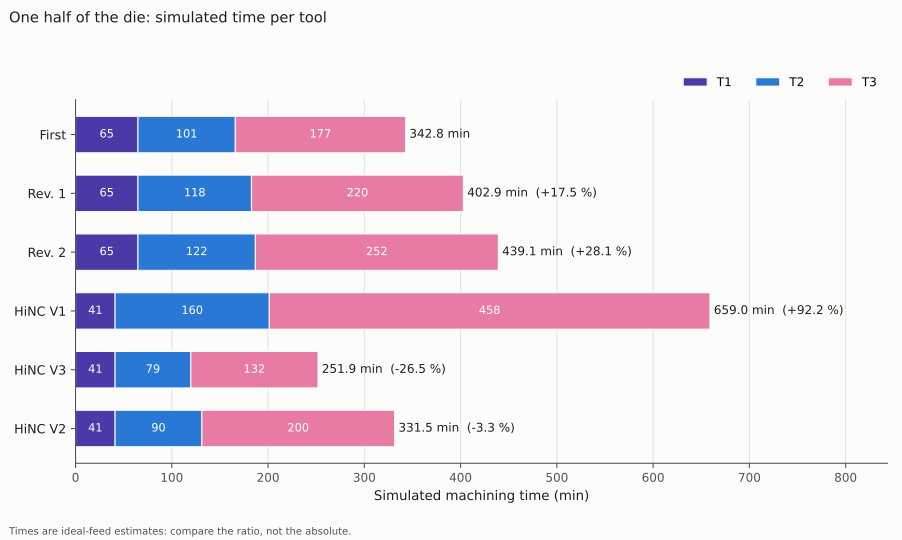
- The accepted programs of the connecting-rod forging die: three tools, a D10 R1 end mill, a D6 ball and an R1.5 long-neck ball, 342.8 min for one half of the die, and two hand revisions of the feeds that slowed it to 439.1 min to protect the R1.5 ball in its own-radius corners. Here HiNC's feed optimization takes the programs over.
The story
The die's acceptance had found its weak place: in the rib grooves' R1.5 concave corners, the R1.5 ball cuts with its whole quarter arc and bends far past the 12.5 µm the agent allowed its finishing. Two hand revisions of the feeds had brought the largest bend down but not under the limit, and made one half of the die 28 % slower. An AI agent handed the programs to HiNC's feed optimization and asked: can the optimizer hold that corner, at what cost in time, and how much faster can the hand-revised programs run if HiNC may only speed them up? It wrote its pass criteria, every setting and its decision rules down first, tried the whole chain on a small probe block at the corner, then optimized the whole die three ways, one program per run, and replayed every version over the probe block on a finer grid. Every number here comes from these plays: the first programs and both hand revisions were replayed beside the optimized ones.
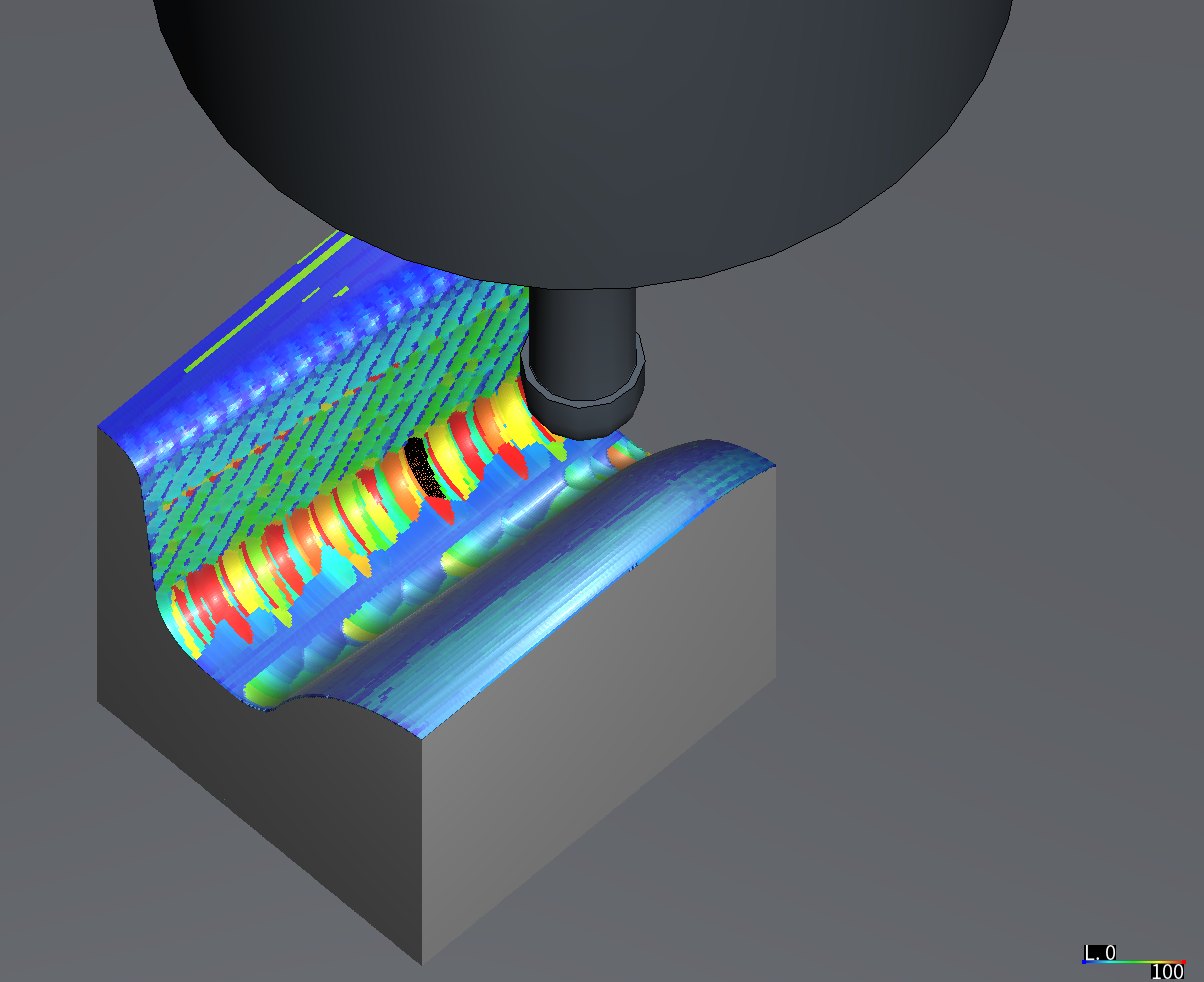
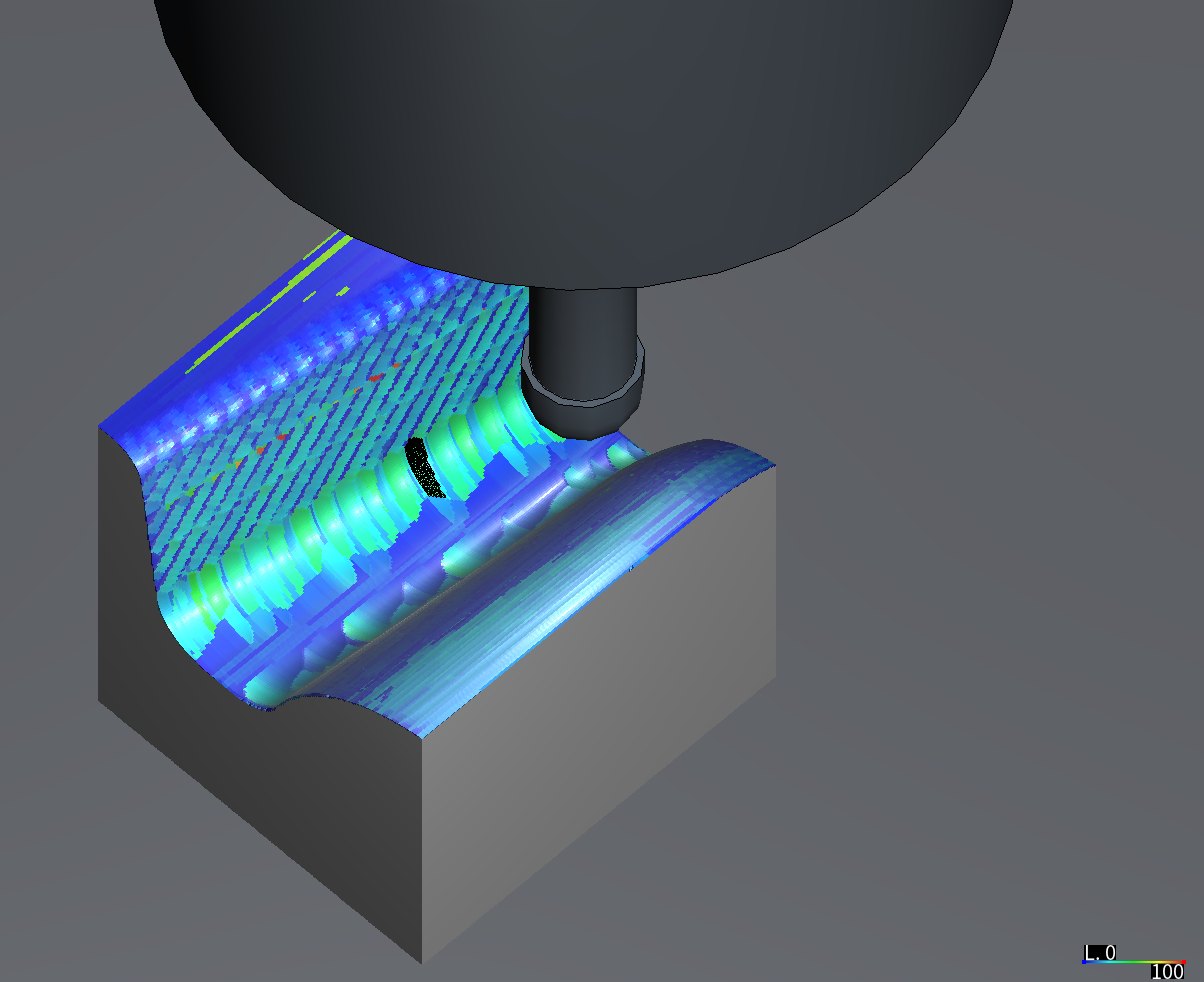
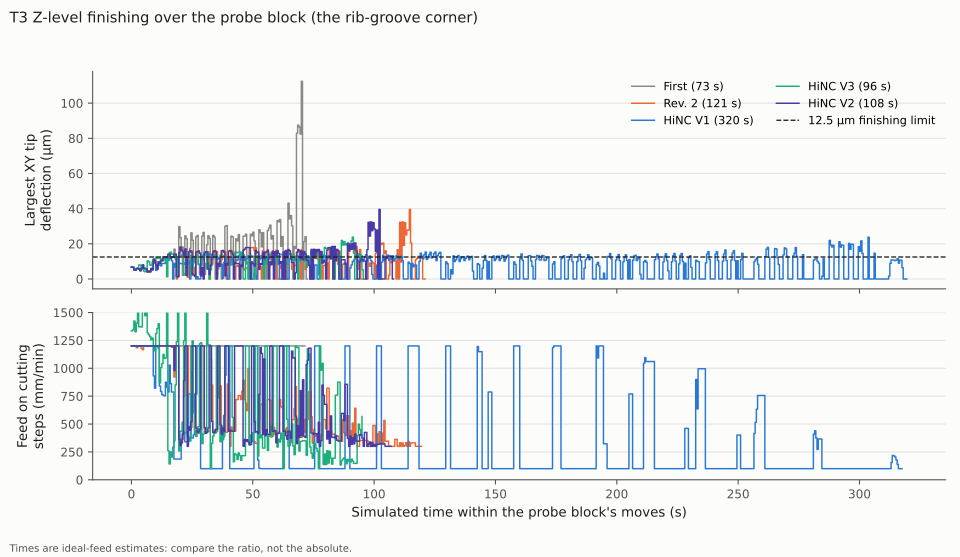
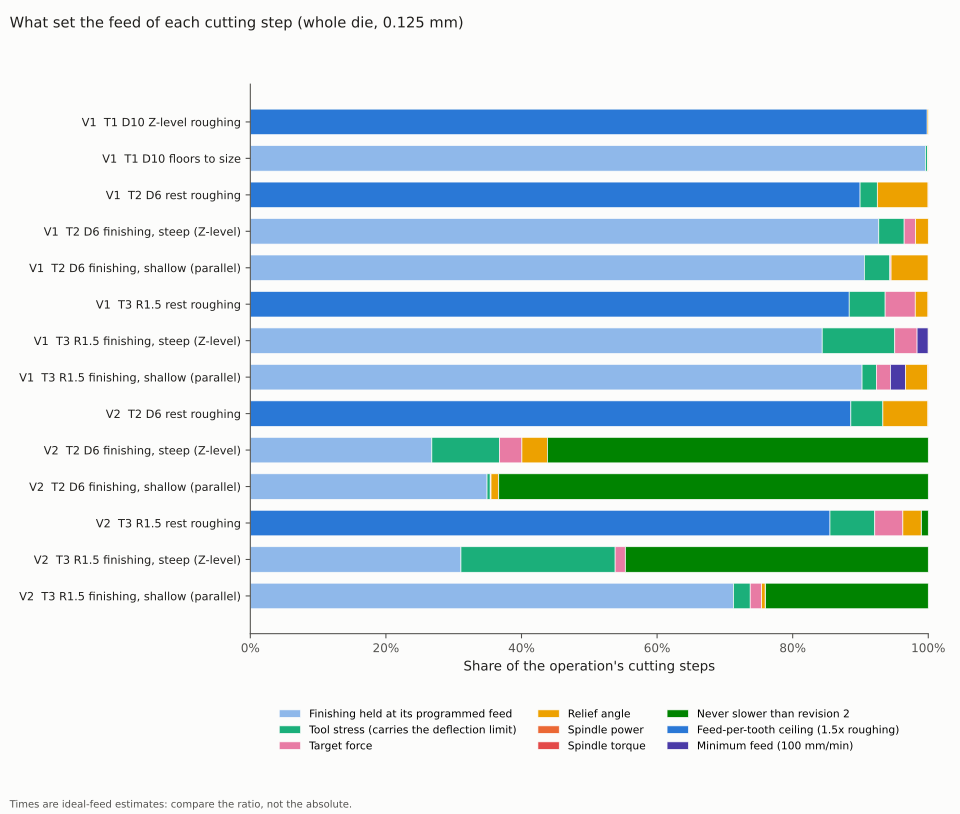
Pictures rendered by HiNC from the die Tech Coordinate's agent designed; the author published no die drawing. The charts are drawn from HiNC's per-step results and the agent's own z-map; the times are ideal-feed estimates, so compare the ratios rather than the absolute times.
| Key number | What it is |
|---|---|
| 331.5 min | one half of the die with the second hand revision kept and HiNC only allowed to speed it up: 24.5 % less than that revision's 439.1 min, 3.3 % less than the first programs' 342.8 min |
| 64.8 → 41.1 min | the roughing program in every optimized version, −36.6 %, with the spindle's power and the tool's stress within their targets |
| 1,422 of 1,423 | probe steps over a deflection limit that HiNC wrote at the 100 mm/min minimum feed when every deflection limit was its target |
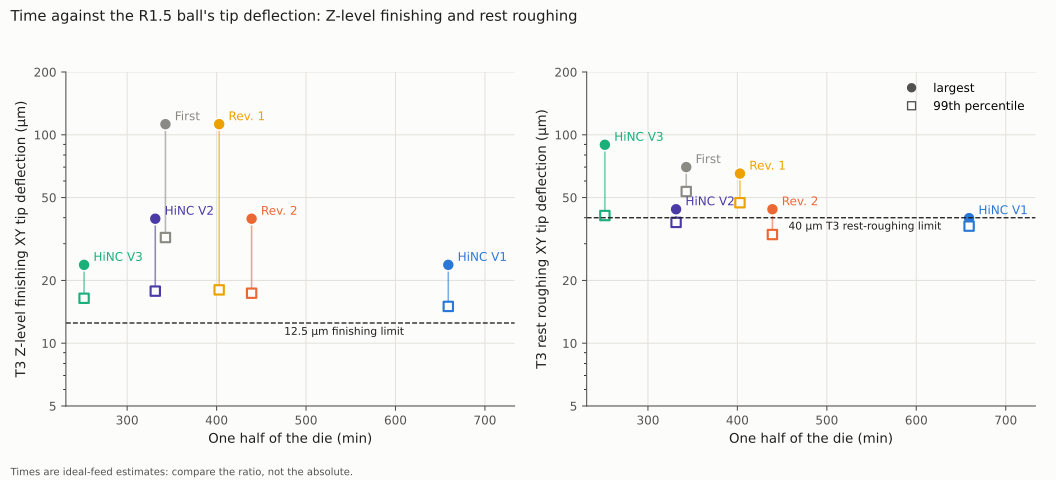
| 112 → 24 µm | the R1.5 ball's largest bend in steep finishing, before and with the deflection limits as targets; the limit is 12.5 µm, and 13 to 24 µm remain in the corner at the lowest feed |
| 659.0 min | one half of the die with every deflection limit as a target, 92 % more than the first programs: 2 mm before and after each slow step slow down with it |
| 251.9 min, 89.5 µm | the same without those extended windows: 26.5 % faster, but the rest roughing bends 89.5 µm where the grid could not see the load |
| up to 8.6 µm | how far a point of an optimized file can sit off its programmed line where a line is split; checked and moved back by the agent |
| 194 min, 46.3 GiB | server time of the nine whole-die plays, and the peak memory of one optimization play |
Four of its nineteen dilemmas
A force target that does not lower ramps
The plan held the finishing to its deflection limit with a target force. On a trial the corner still bent 41 µm, so the agent compared, step by step, the feed the force criterion allowed in HiNC's per-step log with each step's load: on all but one of the 1,497 sloped steps and on every plunge it gave the feed the step would have had anyway; it held on level steps. In HiNC's tool model the tip's bend and the tool's stress come from the same bending moment, so the agent carried the limit on the stress criterion instead, before the first whole-die play.
Corner steps no feed can fix
With the deflection limits as targets, HiNC wrote 1,422 of the 1,423 over-limit steps on the probe block at the lowest feed it may use, 100 mm/min. They lie in the groove's R1.5 corner, and they still bend 13 to 24 µm there. So the corner is not a feed problem: what is left to change is how the ball enters it, or a ball smaller than the corner, as the die's own case page had concluded.
Slow steps that slow their neighbours
Aiming at every limit made the die 92 % slower than the first programs, where the agent had predicted 280 to 345 min. The steps in contact, each at the feed solved for it, added only 16 min. The rest came from HiNC's extended windows: each slow step takes 2 mm before and after it down to its feed, and the finishing of the R1.5 ball had nearly 10,000 of them. The same without windows was 26.5 % faster, but on a grid coarser than the 0.04 mm finishing allowance it let a rest-roughing step bend 89.5 µm.
Points off the programmed line
Where the optimizer splits a line to change the feed along it, the agent walked every written point back to its source line. On an axis that barely moves within a fragment, the fragment keeps the source line's end value: up to 8.6 µm off the line here, and on a 100 mm line it could reach about 0.14 mm. The agent's check moves such points back, and the page says to check an optimized file against its source before it goes to a machine.
The other fifteen are in the full record, eight of them smaller ones in a table; among them a short-window trial run on a rule written before it, a shape criterion that a near-vertical wall cannot pass, and a stock that the hand-revised version nearly started from by mistake.
The result
Every optimization play ran every line of its program and wrote its file; the replays over the probe block raised no warning. In every optimized version the roughing program drops from 64.8 to 41.1 min, its Z-level roughing nearly all at the feed-per-tooth ceiling the agent chose, with the spindle's power at most 0.35 of its short-term rating. With each operation's deflection limit as a target, HiNC brings all but one over-limit step of the corner down to the lowest feed and the R1.5 ball's largest bend from 112 to 24 µm; the corner still stays over 12.5 µm, and the die takes 659.0 min because of the extended windows. Without the windows the die takes 251.9 min, but the loads the grid cannot see get the full feed. Keeping the second hand revision and letting HiNC only speed it up takes 331.5 min, 24.5 % less than that revision and 3.3 % less than the first programs, with the revision's own peaks unchanged. Everything is simulated; no die was cut.
What it brought
- For a machining engineer: the case's hand-revised programs, roughing included, can be sped up by a quarter without any step running slower than they do; aiming at a deflection limit on every step is possible but slow, and it shows where the entry or the tool has to change. The per-step log says which limit set every step, and the optimized file needs checking against its source lines.
- For a teacher or a student: what a feed optimizer holds and what it does not: it has no deflection criterion built in, so a limit rides on one it has; how the windows that smooth the feed spread one slow step over 4 mm; why a grid coarser than the allowance makes a fast optimization untrustworthy.
- For someone deciding whether to use an agent with HiNC: three accepted programs and two hand revisions to three optimized versions in one evening, nine whole-die plays and 194 min of server time; criteria and decision rules fixed first, the missed prediction explained by a version added for it, and the failed criteria reported as failed.
Read the full case record: the die's NC optimization
How the forging, the die and these programs were made: Connecting-rod forging die.